Your switchboard is the heart of your home's electrical system. Most people never look at it until something goes wrong.
But an old board can be a real safety risk. It can also stop you adding solar, a battery or an EV charger. So how do you know when a switchboard upgrade is due? Here are the seven signs we look for, from Rockingham's local energy efficiency experts.
What Does a Switchboard Actually Do?
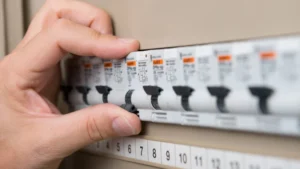
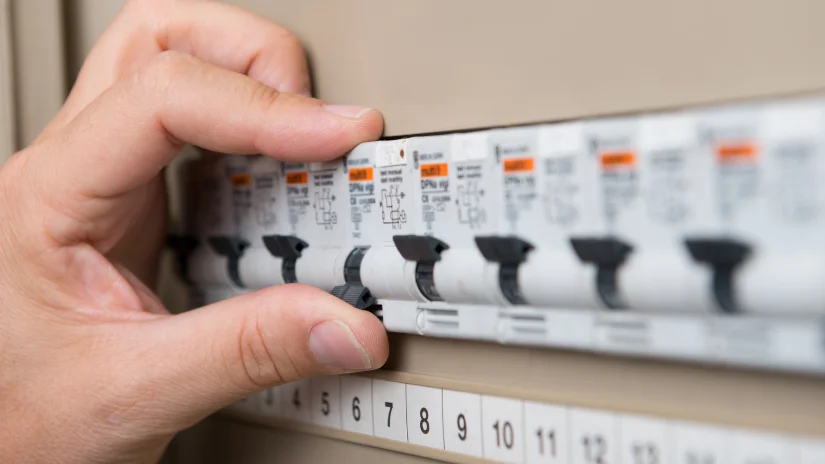
Your switchboard takes power from the grid and splits it into separate circuits. These run your lights, power points and big appliances. Each circuit has a device that cuts the power if something goes wrong.
In older homes, that job was done by ceramic fuses with fuse wire. Newer boards use circuit breakers and safety switches (also called RCDs). Safety switches are the life-savers. They cut the power in a split second if current leaks to earth, such as through a person. Our guide to circuit breakers vs safety switches explains the difference in more detail.
7 Signs Your Home Needs a Switchboard Upgrade
Not every old board needs replacing. But if you spot any of these, it's time to get a licensed electrician to take a look.
1. You still have ceramic fuses
If you open your switchboard and see white ceramic fuse holders, your board is well past its prime. Rewireable fuses offer far less protection than circuit breakers. They're also easy to "fix" with the wrong wire, which is a fire risk.
2. Not every circuit has safety switch protection
Many older homes have one safety switch, or none at all. In WA, a home being sold needs at least two safety switches covering all power point and lighting circuits. Rental homes must have safety switches too. If your board can't manage that, an upgrade is usually the fix.
3. Breakers keep tripping
One trip after a storm is normal. Regular tripping isn't. It can point to an overloaded circuit or a faulty appliance. Or your board simply can't keep up with how you use power today.
4. Lights flicker or dim when appliances start
If the lights dip when the air conditioner or oven kicks in, your circuits may be stretched. It's worth having it checked before it becomes a bigger problem.
5. Heat, buzzing or a burning smell
A switchboard should be cool and quiet. Warmth, buzzing, scorch marks or a burning smell are warning signs. Don't wait on these. Call a licensed electrician straight away.
6. A dark, fibrous backing panel
Many meter and fuse boards installed before 1990 have a backing panel that may contain asbestos. These panels are usually dark brown or black with a rough, fibrous look. Never drill, cut or sand them. A licensed electrician will know how to handle the board safely during an upgrade.
7. There's no room for what you want to add next
This is the sign we see most around Rockingham, Coolongup and Baldivis right now. Solar, batteries, ducted air conditioning and EV chargers all need space and capacity on your board. An old, full switchboard can stop a great upgrade before it starts.
Why a Switchboard Upgrade Matters for Solar, Batteries and EV Charging
As your home's energy efficiency experts, this is where we spend a lot of our time. A new switchboard is often the first step towards lower power bills.
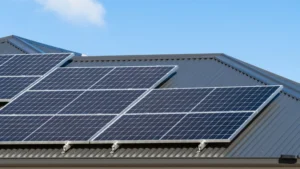
- Solar and batteries need dedicated circuits and protection. See our solar power and solar battery pages for how it all fits together.
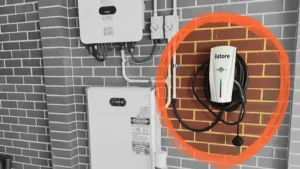
- EV chargers usually need their own circuit. Our guide to Type 2 EV charger installation covers what your board needs to handle.
- Air conditioning and heat pumps add heavy loads that older boards weren't designed for.
Doing the switchboard first means each new addition goes in cleanly, safely and without surprises.
A Coolongup Example: What a Switchboard Upgrade Looks Like
Picture a family in a 20-year-old Coolongup home. Their board has just one safety switch and no spare room. They want solar, a battery and an EV charger before summer.
Here's how a switchboard upgrade for a home like theirs usually runs:
- An electrician inspects the board and checks how each circuit is being used.
- The family gets an upfront, fixed quote before any work starts.
- The power goes off for part of the day while the new board goes in.
- Every power point and lighting circuit ends up protected by safety switches.
- The new board has room for the solar, battery and EV charger circuits.
The result is a safer home that's ready for the next step, not just a like-for-like swap.
Your Electrical Safety Certificate: What It Means
In WA, the paperwork matters as much as the work. A switchboard upgrade counts as electrical installing work. Your licensed electrical contractor must give you an Electrical Safety Certificate within 28 days.
Your electrical safety certificate is your proof that the work was done by a licensed contractor and meets safety standards. For notifiable work, the contractor must also lodge a notice of completion with the network operator, such as Western Power. You can read the official rules on the Building and Energy website.
A few tips:
- Keep it safe with your other important home documents.
- Ask for it if it hasn't arrived within 28 days.
- Check the licence. Electrical contractor licences start with "EC". Our tips on finding a trusted Perth electrician cover what else to look for.
Selling or Renting Out Your Home?
WA has clear rules here. Before a home sale settles, safety switches must protect all power point and lighting circuits, with at least two installed. Landlords must also have safety switches installed in rental properties. The WA Government's safety switch guide has the full details.
If your board can't meet these rules, a switchboard upgrade is usually the simplest way to get there.
Frequently Asked Questions
How do I know if my switchboard needs upgrading?
Look for ceramic fuses, missing safety switches, regular tripping, flickering lights, heat or a burning smell. If you're planning solar, a battery or an EV charger, it's also worth checking your board has room.
How often should I test my safety switches?
The WA Government recommends pressing the test button every three months. If the manufacturer says more often, follow that instead. Our free electrical safety checklist is a handy reminder.
What is an electrical safety certificate in WA?
It's a legal document from your licensed electrical contractor. It confirms the installing work meets safety standards. You should receive it within 28 days of the work being completed.
Does my switchboard have asbestos?
Many boards installed before 1990 have backing panels that may contain asbestos. They're often dark brown or black with a fibrous look. Don't touch or drill them. A licensed electrician can check and handle it safely.
How much does a switchboard upgrade cost?
It depends on the size of your board, the number of circuits and whether asbestos is involved. Contact the office for an upfront quote, with all pricing confirmed at booking.
Book a Switchboard Check With COYCO
If your switchboard is showing any of these signs, don't leave it to chance. Our licensed team will give you honest advice and upfront pricing, with no surprises.
Call us on (08) 9525 0562 or contact the office online. You can also pop into the showroom at Unit 2/5 Leach Crescent, Rockingham. Learn more about our electrical services across Rockingham, Mandurah, Baldivis and Perth's southern suburbs.